They were not childhood friends. They were not from the same province, the same language or the same political entry point. An organisation put them in the same room, and a tribunal put them on the same scaffold.
File ST/01Punjab
Sukhdev Thapar
Born
15 May 1907, Ludhiana
Province
Punjab
Route in
National College, Lahore → Naujawan Bharat Sabha
Role
Organiser; HSRA Punjab
Arrested
April 1929, Lahore
Aged
23 at execution
Formed entirely inside Punjab. His politics came out of a nationalist household, a college founded by the Non-Cooperation Movement, and a province still arguing about 1919. He reached revolutionary organisation through public political work, and stayed on the organisational side of it.
File SR/02Bombay Presidency
Shivaram Hari Rajguru
Born
24 August 1908, Khed, Pune district
Province
Bombay Presidency
Route in
Varanasi → revolutionary circles → HSRA
Role
Action; among those who fired, 17 Dec 1928
Arrested
30 September 1929, Pune
Aged
22 at execution
Born into a Marathi Deshastha Brahmin family at Khed — a town later renamed Rajgurunagar. He left home young for Varanasi, where he studied Sanskrit and came into contact with revolutionary circles before joining the HSRA and travelling north.
Two provinces, two routes, one organisation, one judgment.
I —
The Connection Is Organisational
This is the honest description of the relationship, and it is more interesting than a friendship would be.
Nothing in the record indicates that Sukhdev Thapar and Rajguru knew each other before the HSRA brought them into contact in 1928. They grew up more than a thousand miles apart, spoke different first languages, and entered revolutionary politics through entirely separate networks — Sukhdev through the public political work of Lahore, Rajguru through the revolutionary circles he encountered in Varanasi.
That is precisely the point. The Hindustan Socialist Republican Association was an attempt to build something that had not existed before: a revolutionary organisation operating across provinces, capable of moving people and coordinating action between Punjab, Delhi, the United Provinces and beyond. The fact that a young man from a Marathi-speaking town near Pune could be part of an action in Lahore, planned by a Punjabi organiser, was not incidental to the HSRA’s design. It was the design working.
The two men are joined in Indian public memory as the second and third names in a recitation. Historically, they are joined by an institution.
17 December 1928
The one action that directly connects them is the shooting of J. P. Saunders. Rajguru was one of the two men who fired; Sukhdev is recorded among those who planned the action. Neither role is documented in a way that permits fine reconstruction — there is no minute of a meeting — and the prosecution’s account was assembled largely from the testimony of approvers.
What is certain is the outcome. Both were named in the Lahore Conspiracy Case, both were sentenced to death in the judgment of 7 October 1930, and both were hanged at Lahore Central Jail on the evening of 23 March 1931 alongside Bhagat Singh.
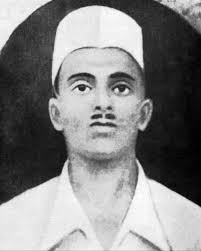
Plate IX Sukhdev ThaparPhotographic reproduction
Why there is no joint portrait
No photograph is known to show Sukhdev Thapar and Rajguru together. Images that appear to depict the three men as a group are modern composites, assembled from separate portraits. This archive does not present any such composite as a historical photograph.
Rajgurunagar
Rajguru’s birthplace, the town of Khed in Pune district, was renamed Rajgurunagar in his memory — the same species of commemoration that placed Sukhdev’s name on a bus terminal in Ludhiana.
II —
What Is Not Recorded
Not supported
Personal anecdotes about the two men together. Conversations in prison. Descriptions of what either thought of the other. Accounts of a shared final night. None of this appears in the documentary record, and this archive does not supply it.
The temptation to write the missing scenes is strong, because three young men executed together on one evening is a story that seems to demand interior detail. But the sources are a prosecution file, a tribunal judgment, contemporary newspaper reporting, and memoirs by men who were imprisoned elsewhere.
What those sources establish is enough: two people who did not know each other in 1927 were, by 1931, sufficiently bound together by a political organisation that the same state killed them on the same evening for the same conspiracy. That is a fact about how the movement worked, and it needs no embellishment.